



Fueling Academic Success through Passion Project at Ignite
Ignite: Switzerland is a transformative 3-month, term-based programme exclusively for Year 9 DCI students who are curious, passionate, and brave. Inspired by EiM's vision of pioneering education for a sustainable future, it combines indoor and outdoor learning in an awe-inspiring natural setting. Supported by a global network of expertise, students take charge of their own learning journey — facing new challenges, discovering their best selves, and gaining fresh perspectives on the world and their place in it. For many, it becomes a defining highlight of their DCI experience.

Famous for its Outdoor Learning Programme, Ignite: Switzerland makes full use of its stunning alpine environment to offer a wide range of exciting, challenging, and easily accessible activities for all students. These include rock climbing, rafting, horse riding, and hiking during the Rock Term (Sep–Dec); skiing and snowboarding in the Snow Term (Jan–Mar); and cycling, fly fishing, and canoeing in the Water Term (Apr–Jun). Through these experiences, students build confidence and resilience in the outdoors —qualities that prepare them to take on leadership roles in all areas of their lives.

In addition to the extraordinary outdoor experiential learning, students engage in classroom learning five days a week, following a timetable similar to that of a traditional school. The academic programme is both rigorous and comprehensive, with a core curriculum that feels familiar. What sets it apart are the Electives, which are designed to inspire curiosity, deepen understanding, and encourage reflection—ultimately culminating in the Passion Project exhibition.
Today, we're delighted to speak with Julia Santer, English Teacher and Passion Project Lead, to explore a different dimension of Ignite: Switzerland—how it empowers students to strengthen their academic skills through the Passion Project and its innovative, holistic learning journey.
Question: Could you give us an overview of the Passion Project offered at Ignite: Switzerland?
Julia: The Passion Project provides an excellent opportunity for students to produce a truly personal and often creative product/outcome that demonstrates a consolidation of their learning during their time at Ignite: Switzerland. The personal nature of the project is important; the project should revolve around a challenge that motivates and interests the individual student.
The Passion Projects are student-centered and age-appropriate, and they enable students to engage in practical explorations through a cycle of inquiry, action and reflection. Each student develops a personal project independently. The Passion Project emphasises experiential learning. Through the project, students experience the responsibility of completing a significant piece of work over an extended period of time, as well as the need to reflect on their learning and the outcomes of their work — key skills that prepare students for success in further study, the workplace and the community. This is an assessed piece of work, and it will be reported on in the Ignite: Switzerland Report.
Question: What types of topics do students tend to explore in their Passion Projects?
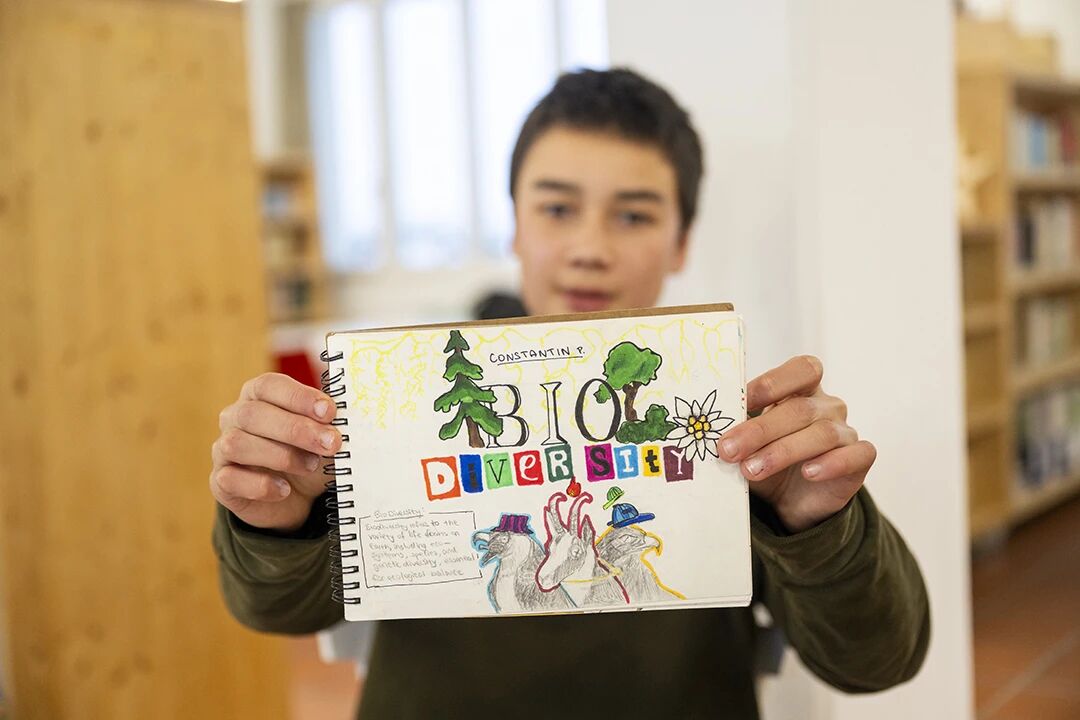
Julia: For Passion Project students combine their passion with their experiences in Switzerland. This process incorporates the Sustainable Development Goals (SDGs) and allows students to explore their personal 'teaspoon of change', reflecting on how they can positively impact the world. The culmination of this journey results in unique and meaningful projects that inspire action and encourage others to contribute to positive change in their communities.
Question: In what ways does the Passion Project strengthen students' academic skills?
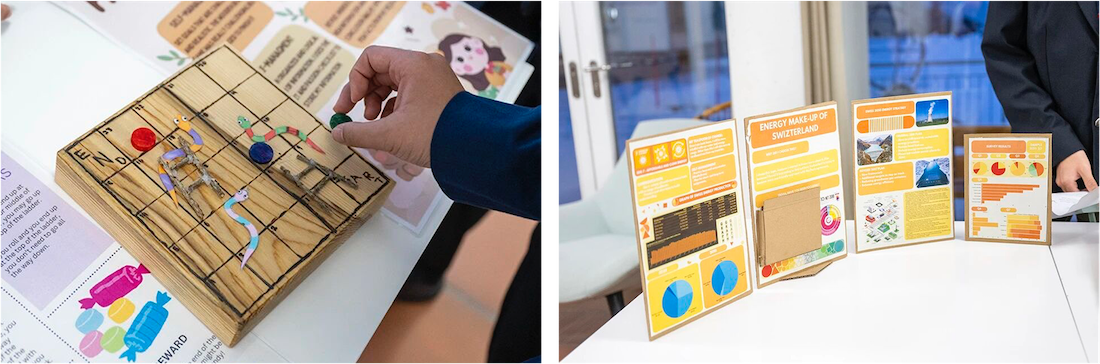
Julia: A key component of the Passion Project is the incorporation of Approaches to Learning (ATLs). Students are encouraged to select specific ATLs to focus on, particularly those they wish to improve. Notably, research and self-management are often the most popular choices. Many students aim to enhance their time management skills, set challenging yet realistic goals, and synthesise information from various sources to bolster the reliability of their research.
To ensure a comprehensive exploration of their chosen topics, students must utilise at least two of the four active research methods outlined in the MISO framework: media research, interviews, surveys, and observation. Media research is mandatory, while students can select an additional method that best suits their project. Interviews with teachers and local community members, along with surveys conducted among Gymnasium and Ignite students and staff, provide invaluable insights that support their research. By focusing on Approaches to Learning (ATLs), students enhance their research, self-management, social, communication and critical thinking skills.
Question: Could you share an example of what a Passion Project looks like at Ignite: Switzerland?
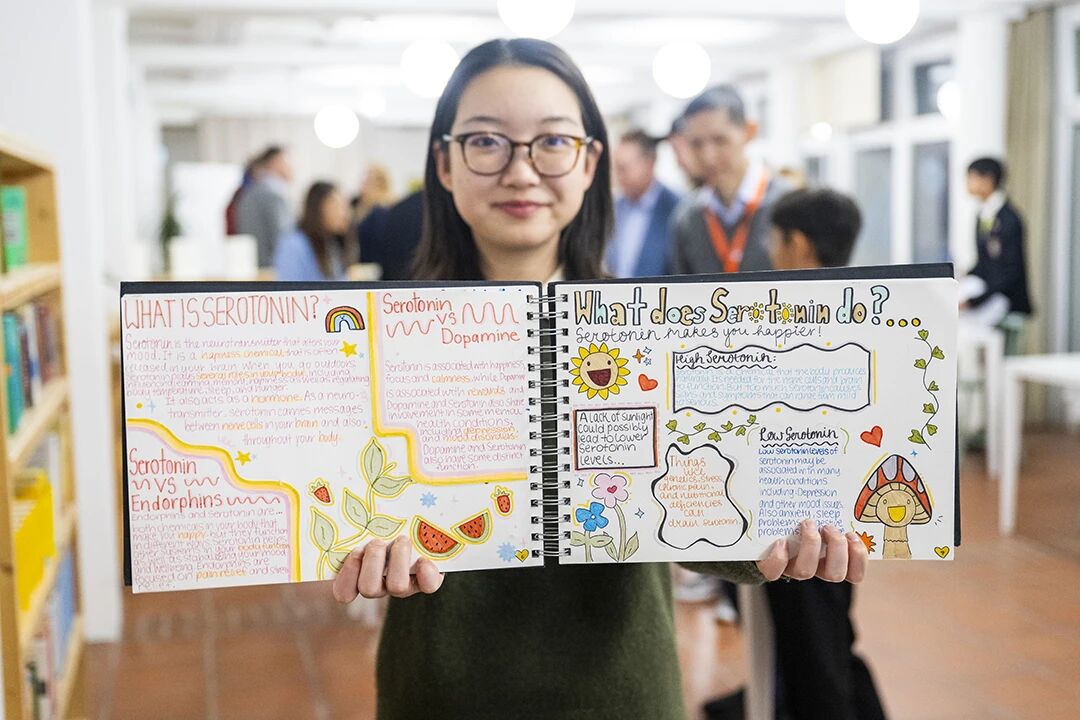
Julia: One of the most remarkable Passion Projects is the following: A student chose to explore the subject of wellbeing by investigating the question: How does living in Switzerland benefit your physical and mental health? To present her findings, she created a beautiful scrapbook that showcased her research on various aspects of life in Switzerland, including its effects on mental health and the roles of serotonin and dopamine. The scrapbook not only included valuable information but also featured survey questions and results gathered from her peers at IGNITE, along with important resources like psychology and emergency hotlines. In addition to the scrapbook, she designed informative posters and crafted 'happiness boost cards' which provided practical suggestions for improving mental and physical health on a daily basis, making it easy for others to implement small changes in their lives.
Aligning her project with SDG 3: Good Health and Wellbeing, her personal 'teaspoon of change' involved educating others around the functions of the brain and how serotonin and other happiness chemicals in the human body work and what effects they have on physical and mental health. Her call-to-action involved encouraging friends and family — especially elderly relatives — to spend more time outdoors as she recognised that such interactions could significantly boost their health and wellbeing. To further enhance her Approaches to Learning (ATLs), the student chose to focus of Self-Management and Communication. By doing so, she enhanced her organisational skills and effectively conveyed her message to her audience through different forms of media.
Question: How does the Passion Project benefit students in their future learning — both when they return to their own schools and beyond?
Julia: The Passion Project is not merely a craft initiative; it is an academically rigorous endeavour that prepares students for future challenges. It serves as a stepping stone towards the Extended Essay for the IBDP or the Extended Project Qualification (EPQ) for A Levels. By engaging in this project, students cultivate vital skills that will benefit them in their future academic and professional journeys.
A fundamental principle of the Passion Project is the emphasis on process rather than product. Students embark on a self-directed exploration, focusing on personal interests while developing their own success criteria. Throughout the project, reflection plays a pivotal role. Students regularly assess whether their initial goals were met, how their understanding of local, environmental, or social issues has evolved, and how they might improve their processes for future learning.
It is important to recognise that students may not always achieve perfection in their projects. However, the real value lies in the journey itself—selecting a project that ignites their passion, exploring their personal 'teaspoon of change', aligning it with an SDG, and striving to improve their chosen ATLs. This process not only empowers them to make a difference but also inspires others to recognise how they, too, can positively impact our world. Each step taken in this process brings students closer to their goals and fosters a deeper connection to their communities and the world around them.
Applications for AY25/26 are now open. Please check your school's official communications for details on how to apply.
Follow along for the latest updates and stories from every DCI school. Don't miss the chance to be part of Ignite: Switzerland and experience an enriching journey of innovative learning that builds both academic and future-ready skills.
Connect with us